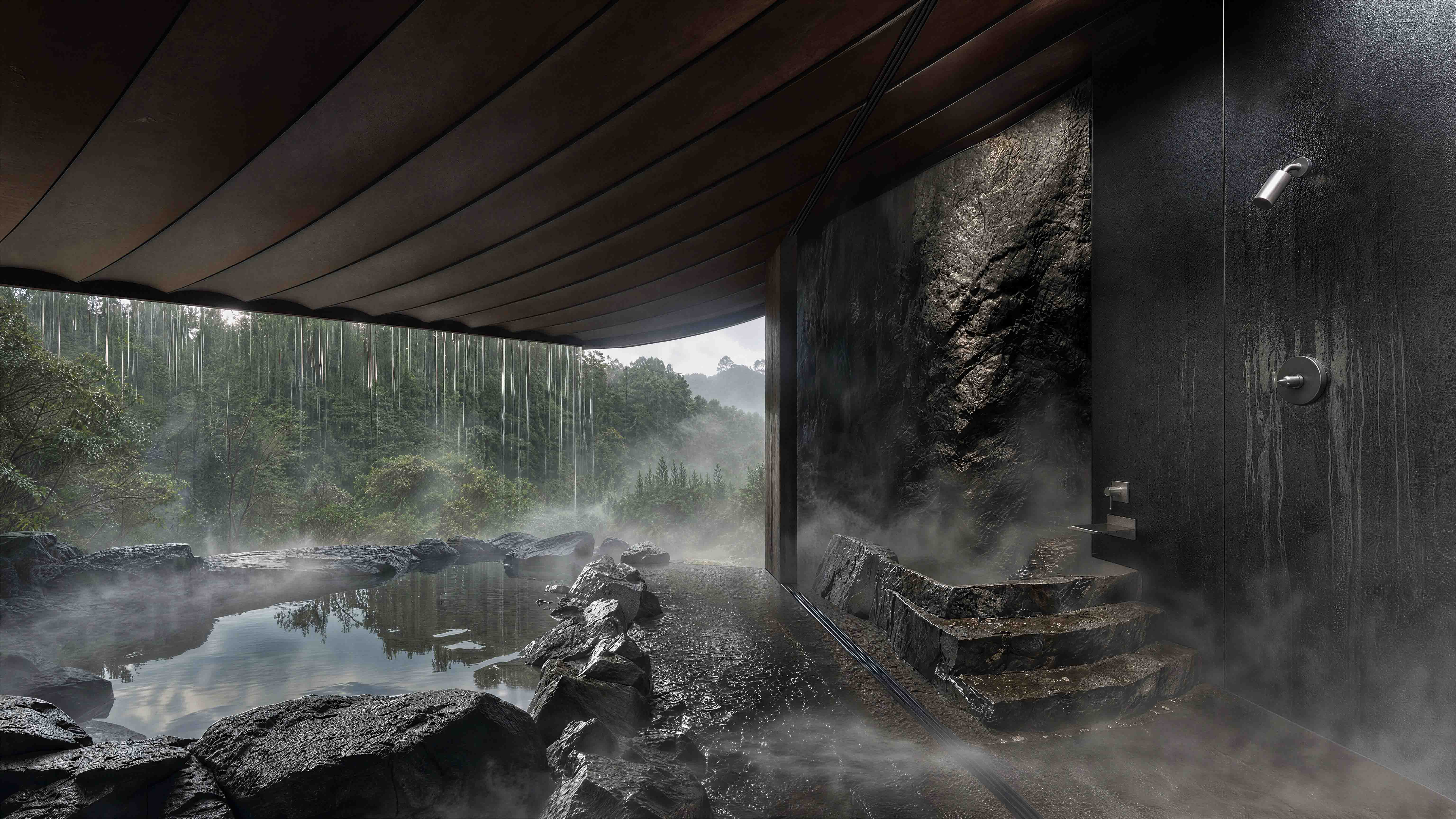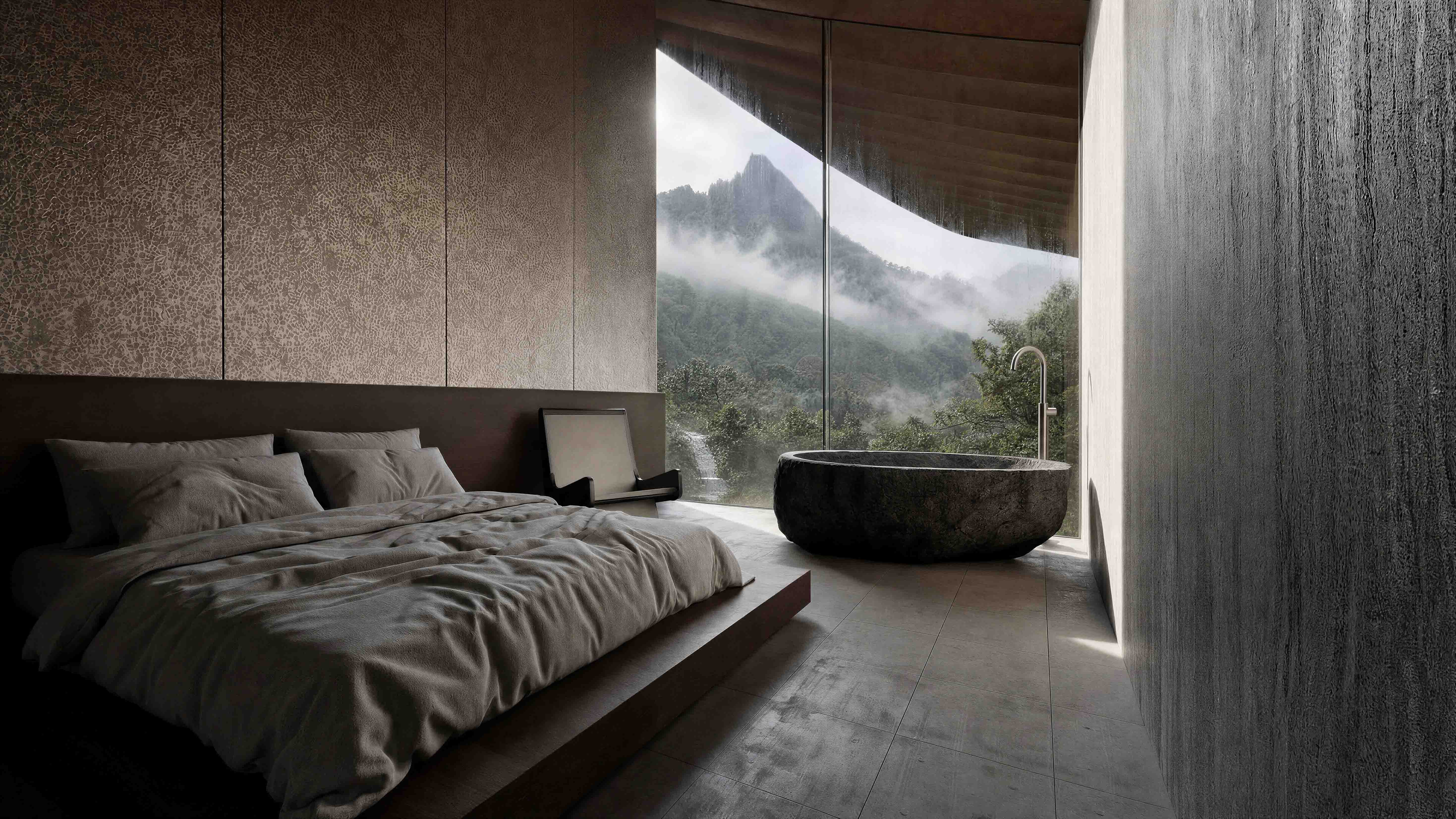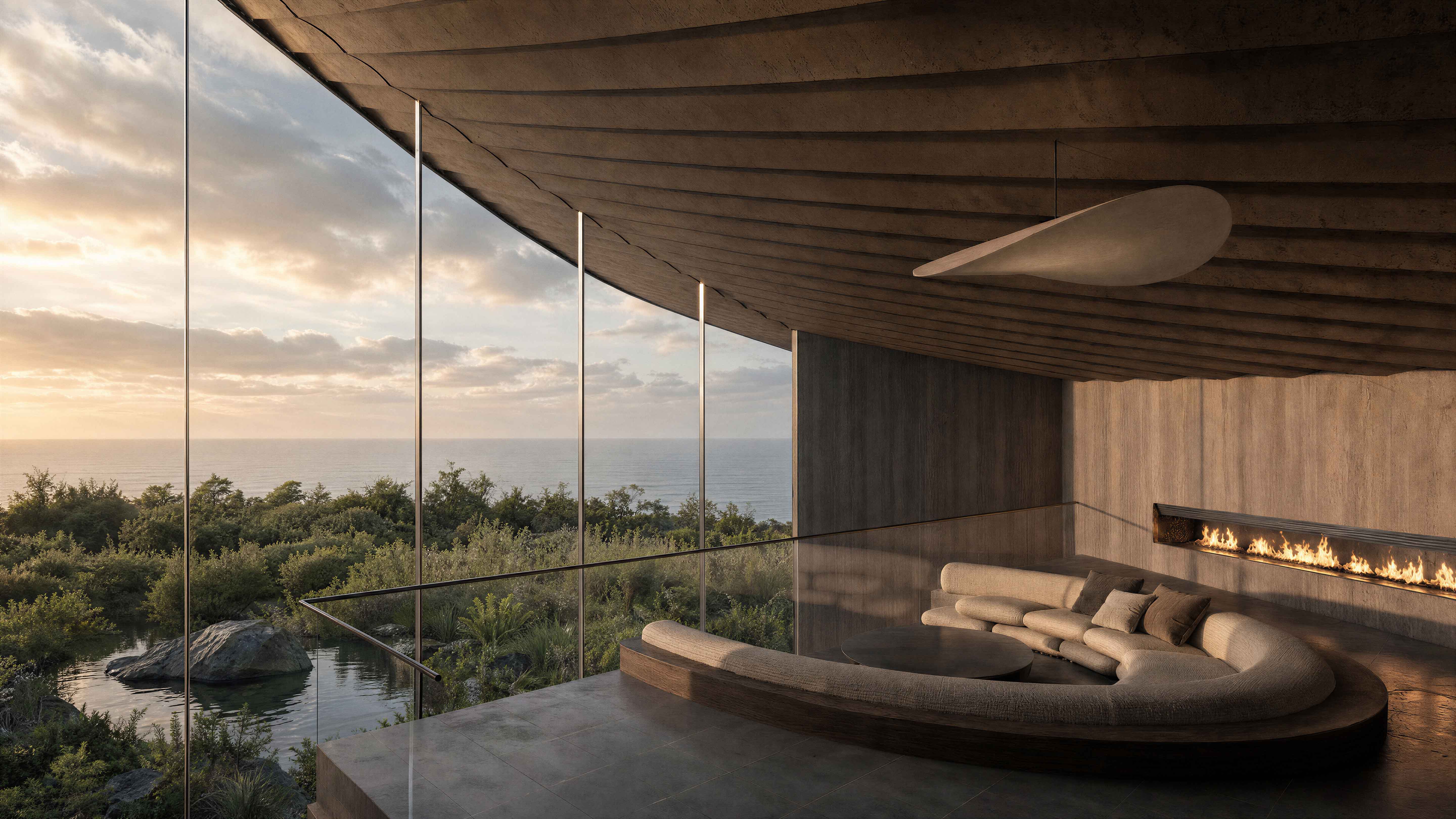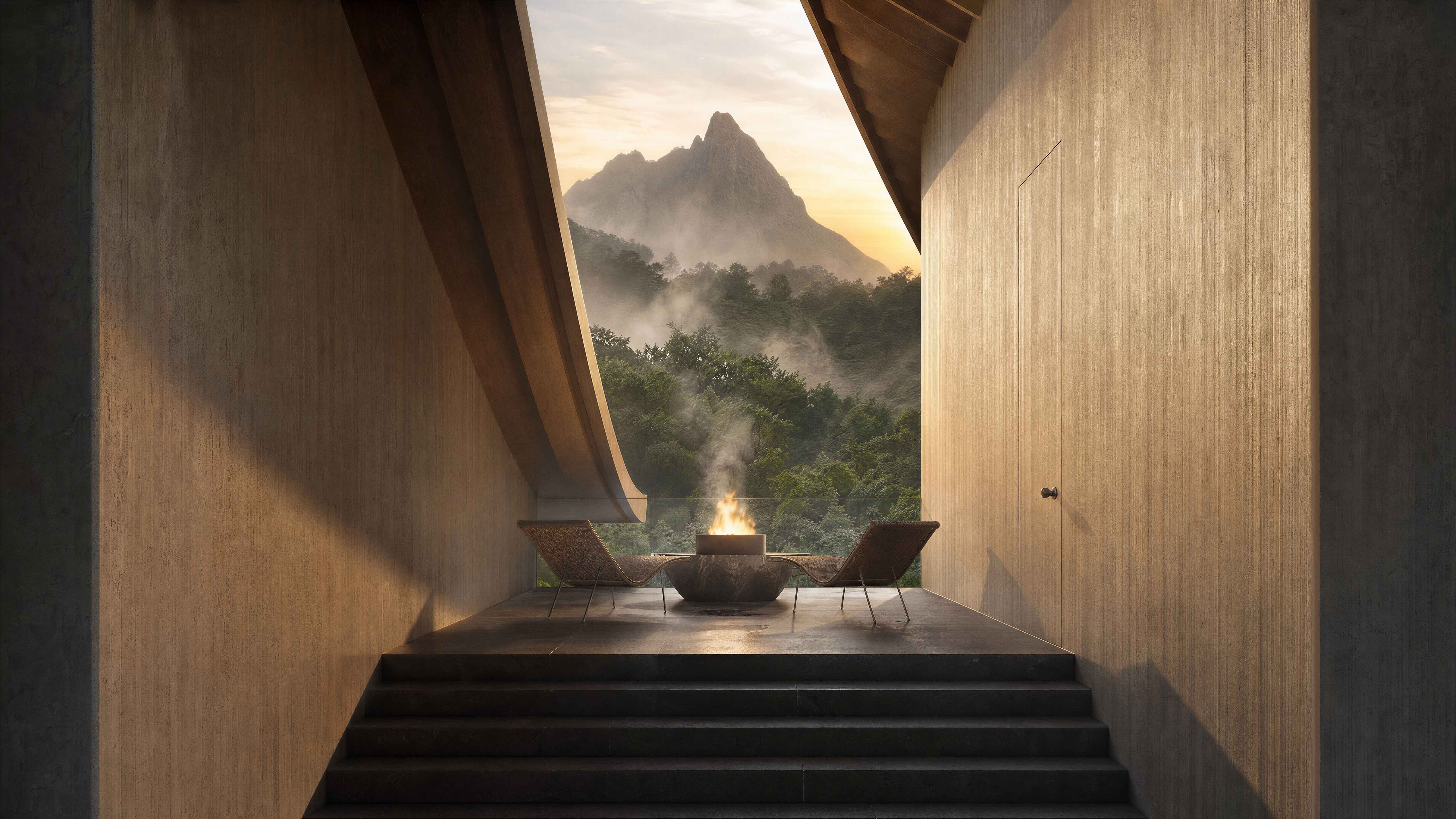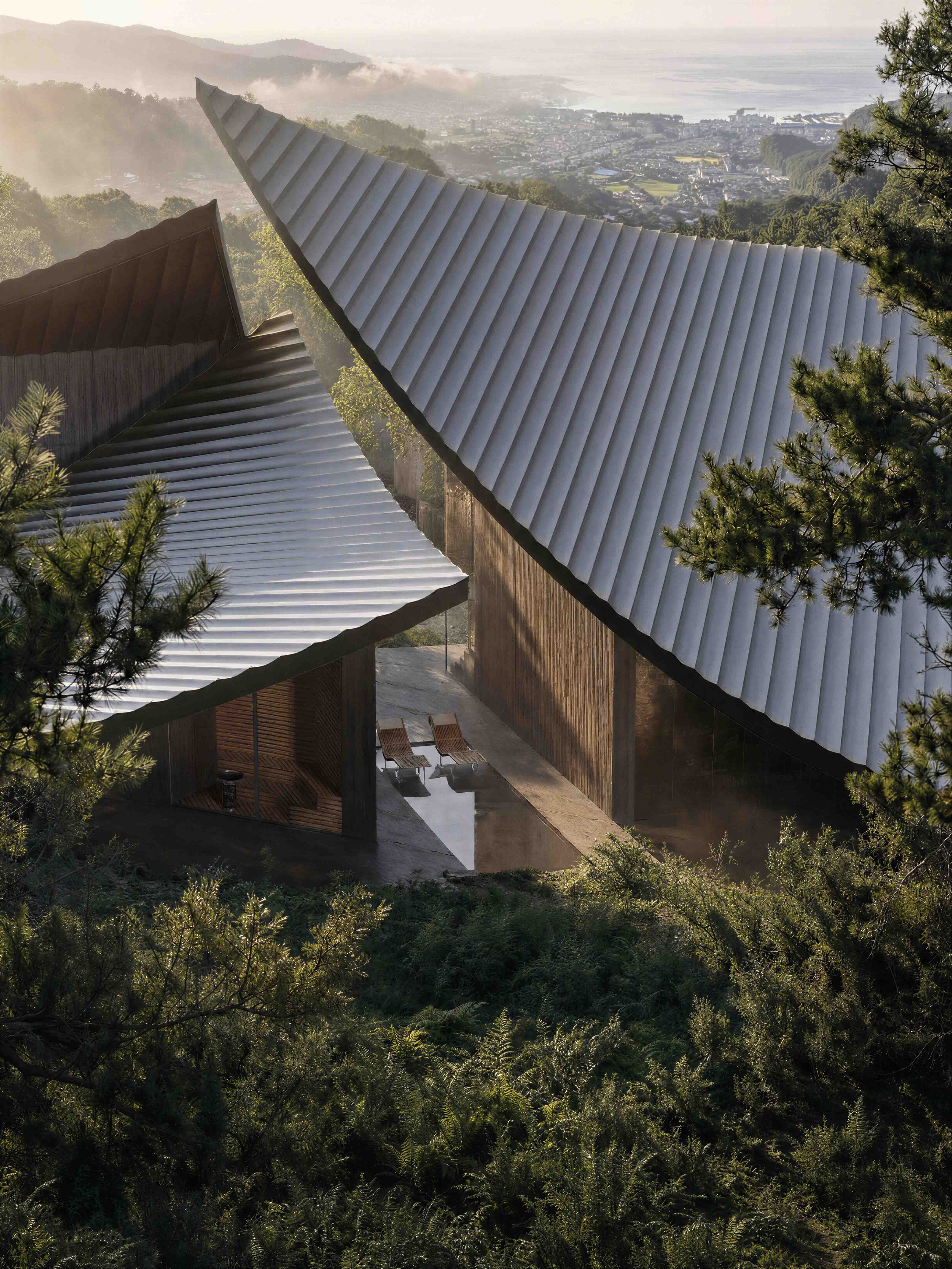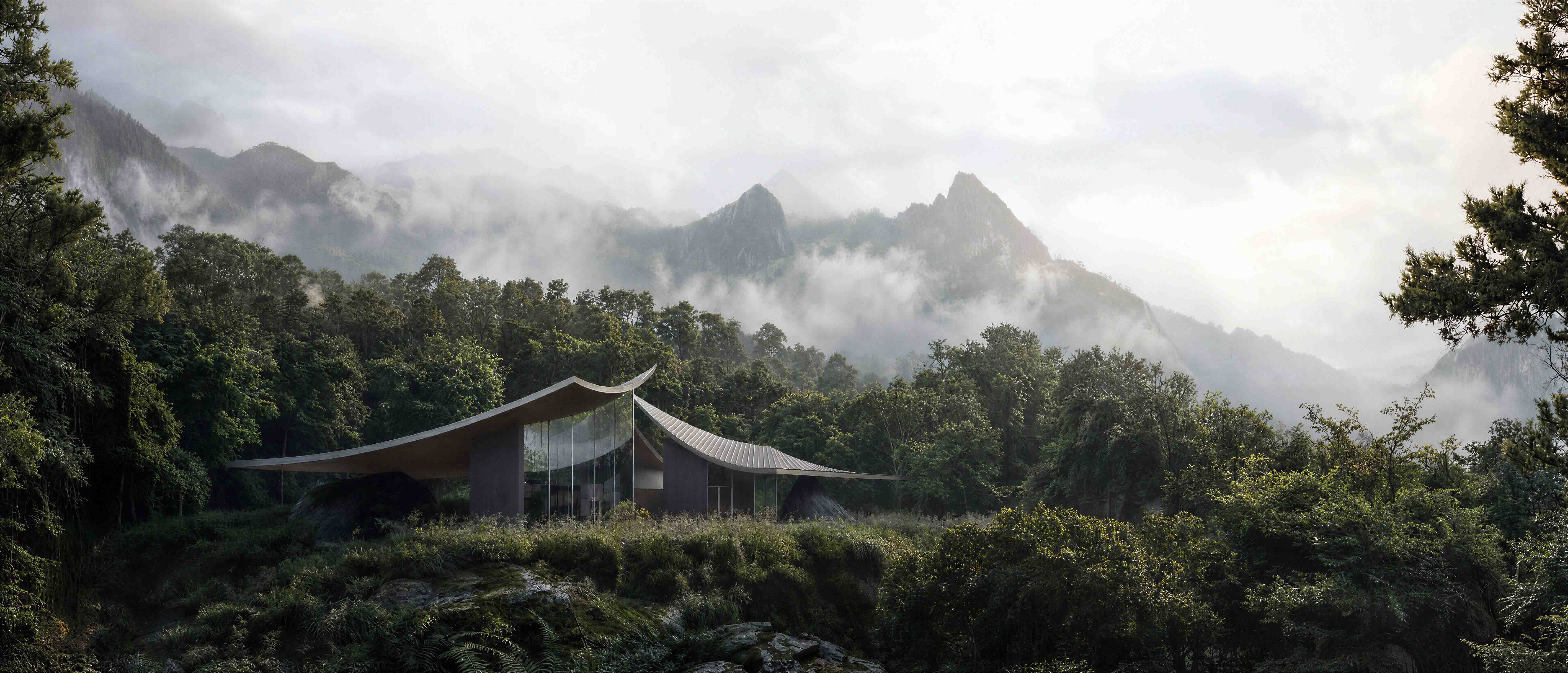
"Echo of the Mountain" won the prestigious Excellence Award in the NOT A HOTEL DESIGN COMPETITION 2026, selected from 1,058 submissions across 112 countries. A jury featuring Bjarke Ingels, Sou Fujimoto, and Masamichi Katayama praised its mountain-inspired form, fluid in-and-out dialogue, and local materiality of timber, stone, textured concrete, and metal. Experience the spatial design in this concept film.
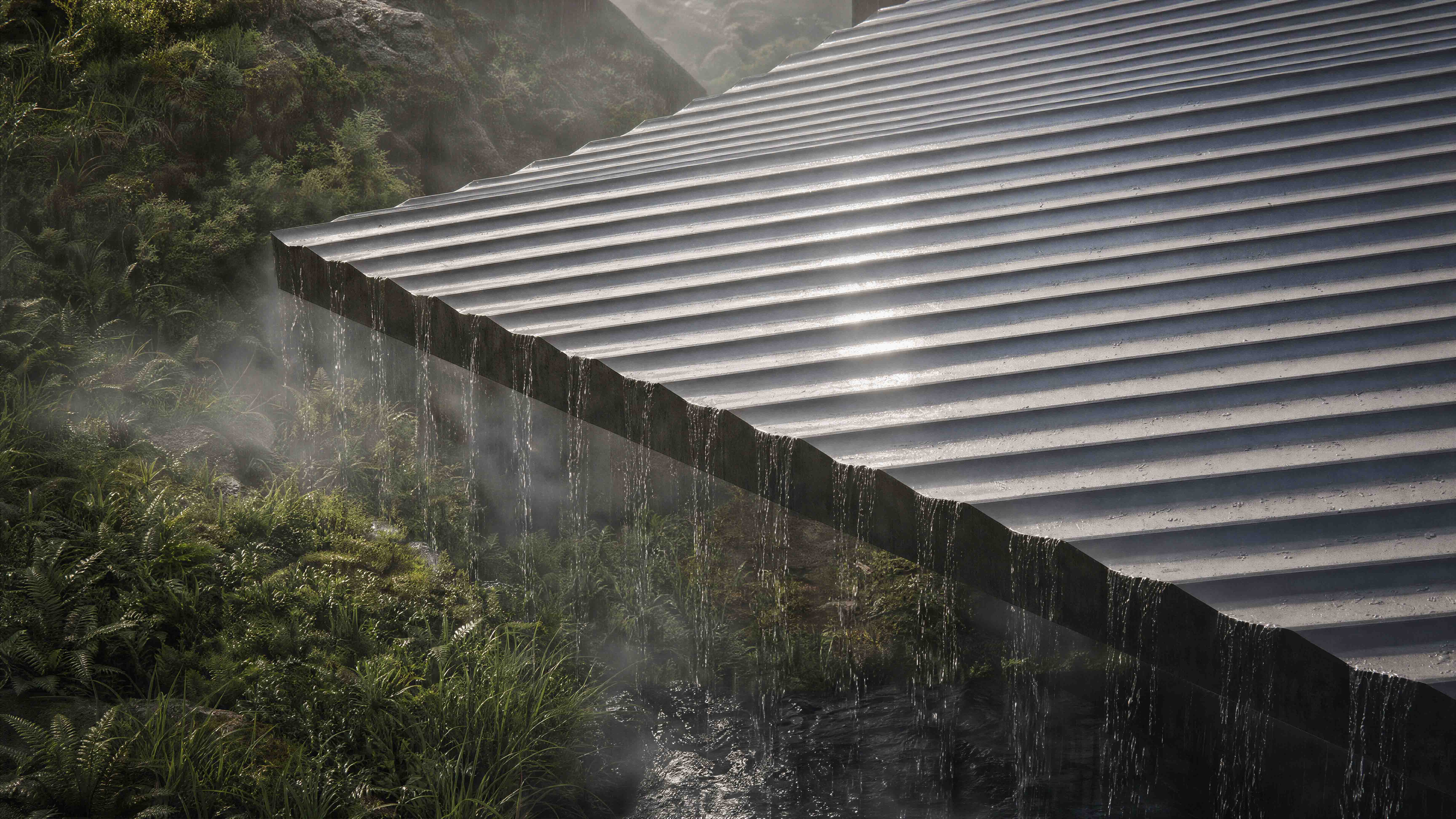
Yakushima is defined by its water. It is said that it rains thirty-five days a month—and to live here is to inhabit the rain itself. The design does not resist this. Three sloping roofs follow the rhythm of the surrounding peaks, channeling the island's rainfall along fluted tiles into shimmering curtains at the building's edge. What might be kept out becomes the boundary itself: a living, moving threshold between inside and wild.
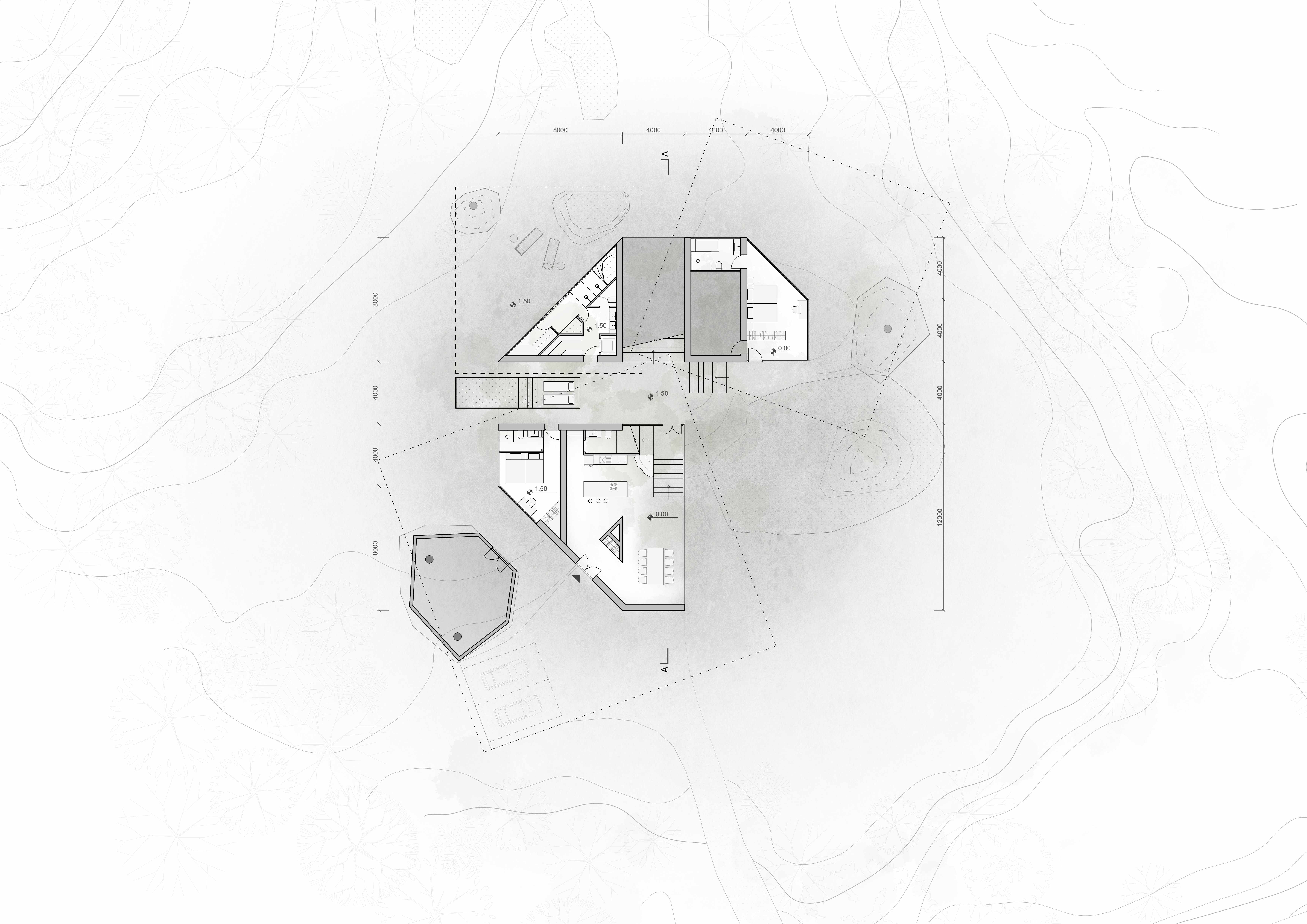
The massing deconstructs the mountain into three volumes anchored by monolithic stone bases. Emerging from the slope rather than sitting upon it, the structure reads as a tectonic extension of the landscape—as if the peaks had simply continued downward into shelter.
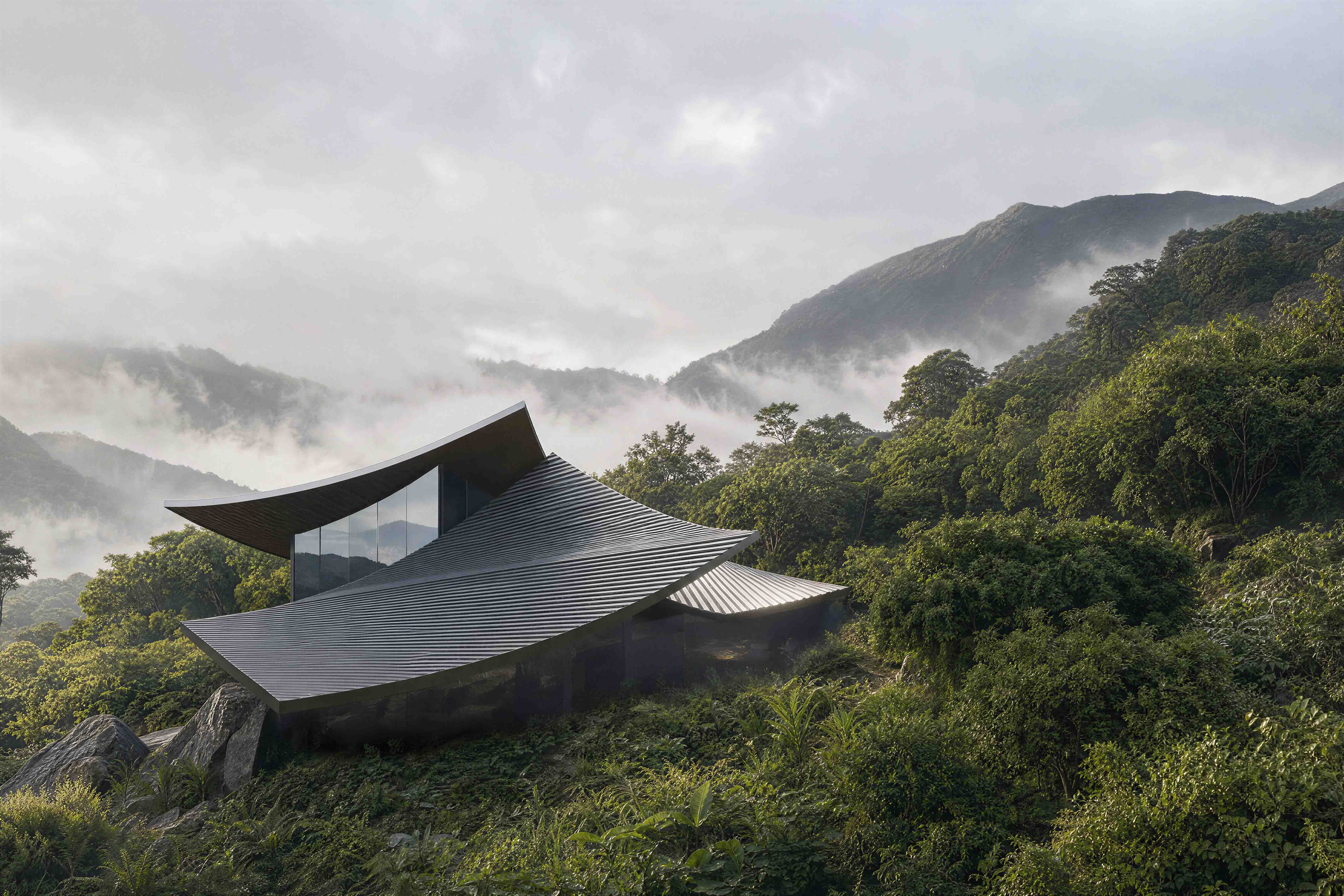
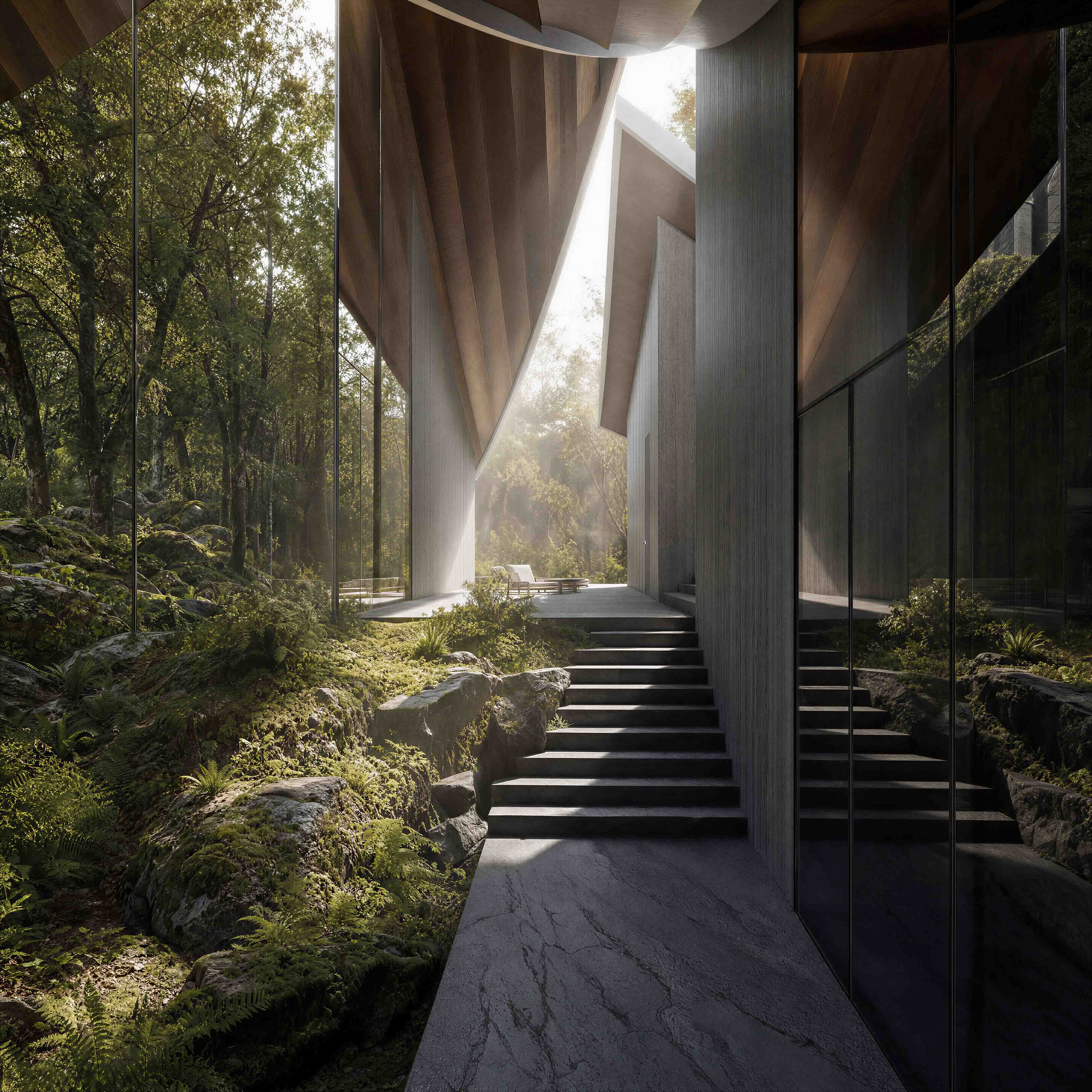
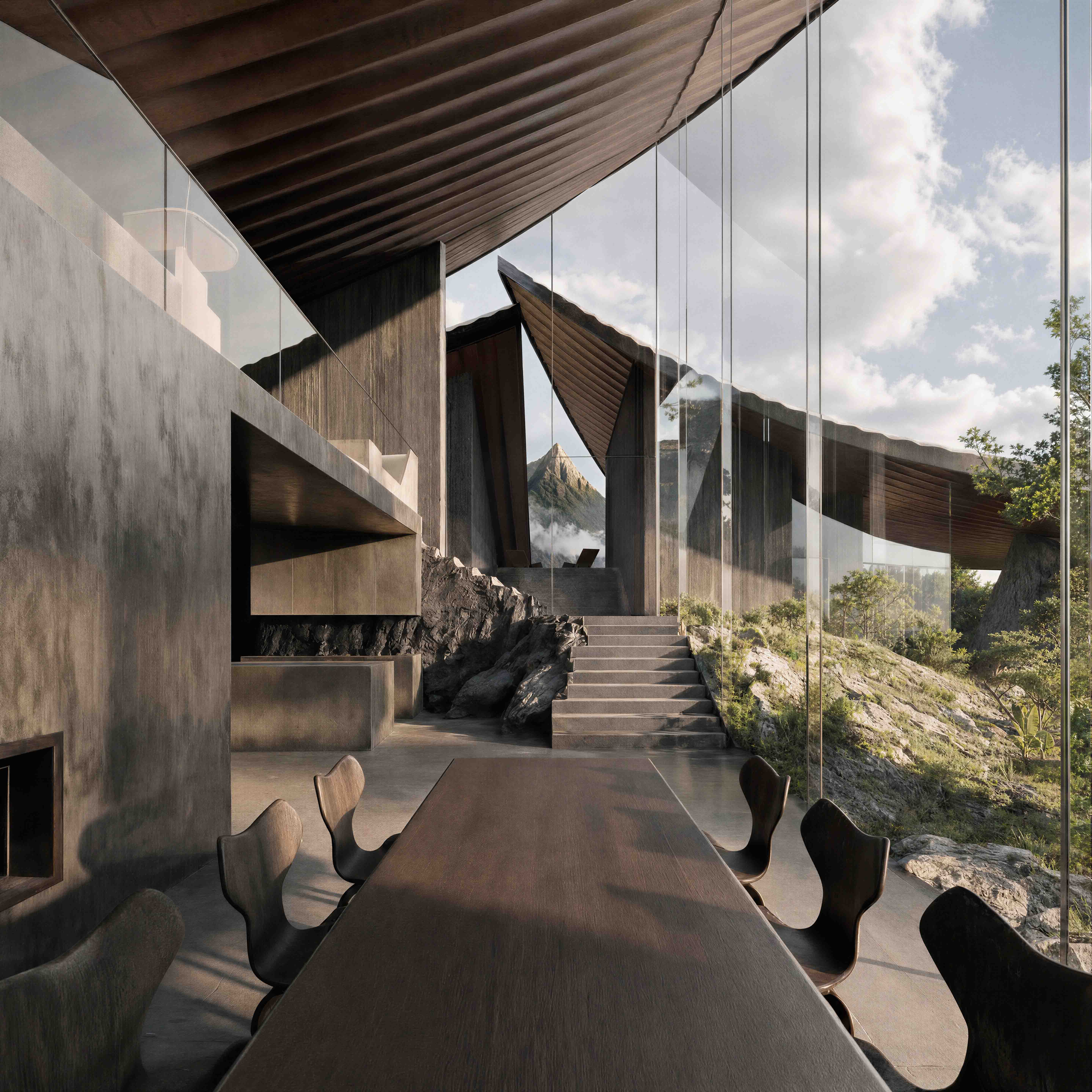
The building is organized around a central spine that rises gradually from the forest floor—from +0.0 to +1.5 to +3.0—turning the act of moving through the house into a sectional journey. The lower floor is submerged in the density of the surrounding forest, intimate and enclosed. The upper floor opens in two directions at once: toward the looming mountain peaks behind, and the expansive seascape ahead.
Four distinct sanctuaries lie beneath the intersecting rooflines: a mountain-facing fire terrace, a pool held within the forest, a dining room that dissolves into the trees through panoramic glazing, and a living room that frames the ocean through the sweep of the roofline. Bedrooms are isolated as private retreats, each opening directly onto the spine's terrace—ensuring that nature is not merely viewed, but physically traversed in daily life.